. KWE . KWE .
Location: Belleville, Ontario
Client: Summers & Co
Final Construction Costs: $6 million
Size: 30,700 sq.ft.
Status: Completed, 2024
Team Members: Eladia Smoke, Chelsea Jacobs
With: Invizij Architects
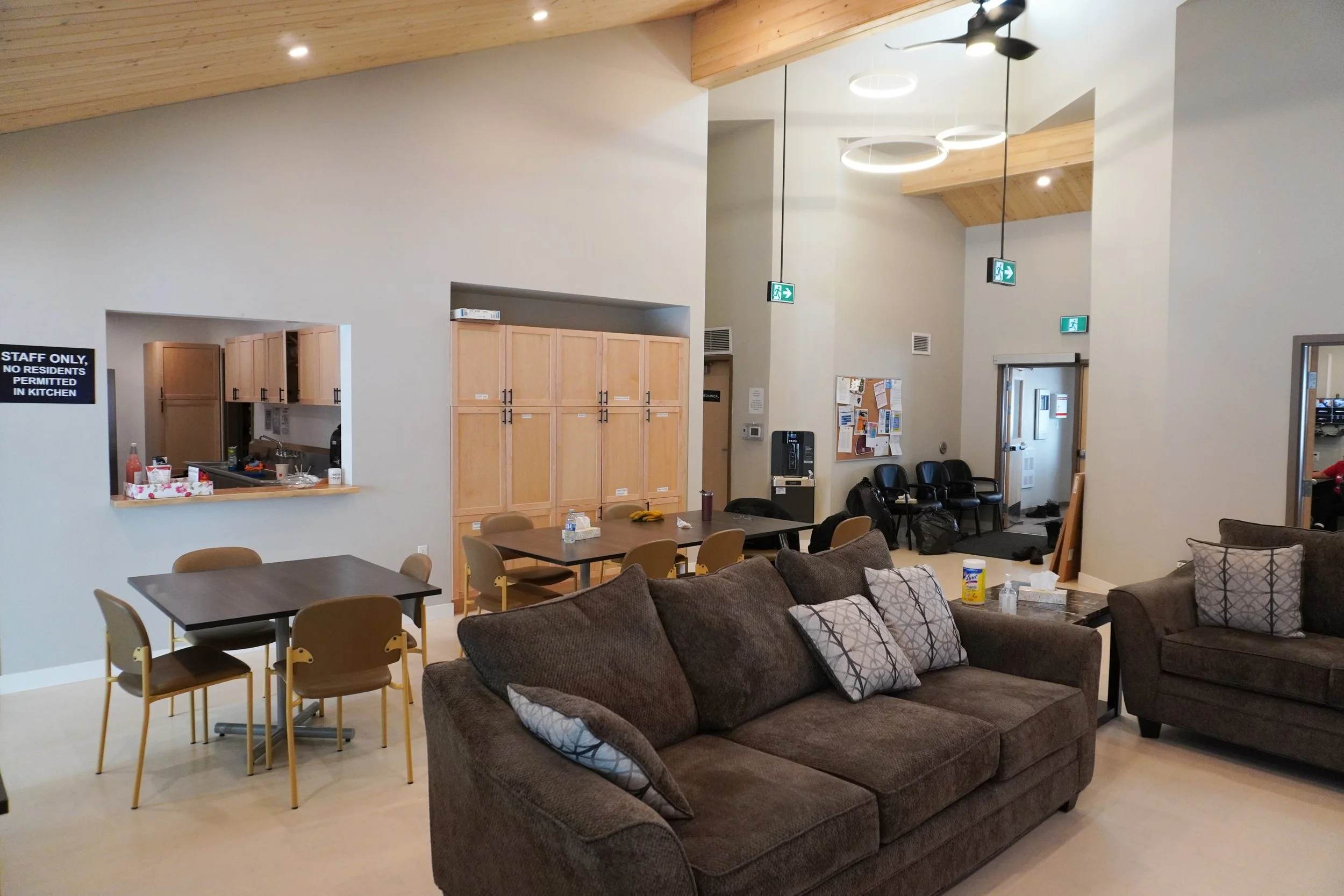
The adaptive reuse of a former Service Canada Centre, located in Belleville, will be converted into 38 housing units to support an inclusive and integrated community for local and Indigenous peoples and families. The rehabilitation project will also include ground floor commercial space intended for Indigenous organizations.
Collaboration and engagement were central to the design process undertaken. Supported by Invizj, Smoke Architecture worked with Garden River First Nation, Mohawks of the Bay of Quinte, and Missanabie Cree First Nation to ensure the building would properly represent the future tenants inhabiting both the residential and commercial spaces.
Important to the adaptive reuse of the former federal building into housing units, was to address the institutional look and feel of the building and create a comfortable and welcoming space that promotes a healthy place to live and work. This was partly addressed through the incorporation of artwork and natural materials. Indigenous artwork is to be incorporated throughout the exterior and interior and will be representing the three distinct Nations who have come together to collaborate and bring this project forward. Natural materials have been selected such as wood ceiling and wall treatments that will continue throughout the public areas including the lobby, corridors, and amenity spaces to create a comfortable and welcoming space, and a sense of continuity throughout the building.
Creating spaces for land-based learning were fundamental to the project, as we had heard during our engagement session with the Indigenous community members attached to the project. As the existing site of the building was mainly parking, we carved out areas along the building perimeter and from the parking lot to support activities that connect to the land. This included gathering spaces and areas to garden, which was also key to our design of the fourth floor roof patio. The roof patio will provide residents the space to meet in circle, cook and gather outdoors, and ample gardening space for community gardening.
Achieving 25% energy efficiency over existing conditions was critical to the design process, we were able to achieve this through the incorporation of PV panels on the rooftop and by optimizing the wall assemblies with the help of a building envelope specialist.
Location: Hamilton, Ontario
Client: Sacajawea Non-Profit Housing Inc.
Status: Completed, 2024
Budget: $5.58 million
Size: 14,725 sq. ft.
Team Members: Eladia Smoke, Kyara Wendling, Esther Link
With: Invizij Architects
The adaptive reuse of a former presentation space for the Pearl Company, located in Hamilton, has been converted into 15 housing units to support an inclusive and integrated community for local and Indigenous peoples and families. The rehabilitation project will also include a community programming space with access to a teaching style kitchen with adjacent office and counseling space for community use. Collaboration and engagement were central to the design process undertaken. Supported by Invizj, Smoke Architecture worked with Sacajawea Non-Profit Housing Inc. to ensure the building would properly represent the future tenants inhabiting both the residential and communal spaces. Important to the adaptive reuse was to address the institutional look and feel of the building’s exterior brick facade and create a comfortable and welcoming space that promotes a healthy place to live.This was addressed through the incorporation of artwork within the window paneling system. Floral Indigenous patterns were designed by Naomi Smith to portray flowers flourishing together despite their surroundings creating a beautiful garden, representing the community it now houses. The floral design is portrayed on coloured backgrounds representing the colours of the medicine wheel and its connection to the cardinal directions. Natural materials were also prioritized for interior finishes throughout the public areas and residential suites to create comfortable and welcoming spaces, and a sense of continuity throughout the building. Circles and curves were also added, this includes wall curvature in the residential units, floor and ceiling f inishes as well as lighting selection in the community spaces. The circular shapes portray a sense of comfort and familiarity as members gather within their own homes as well as with the community.
Location: Brantford, ON
Client: Brantford Native Housing
Value: $11,440,000
Size: 18,135 sq. ft.
Status: Under construction
Team Members: Eladia Smoke, Esther Link, Kyara Wendling
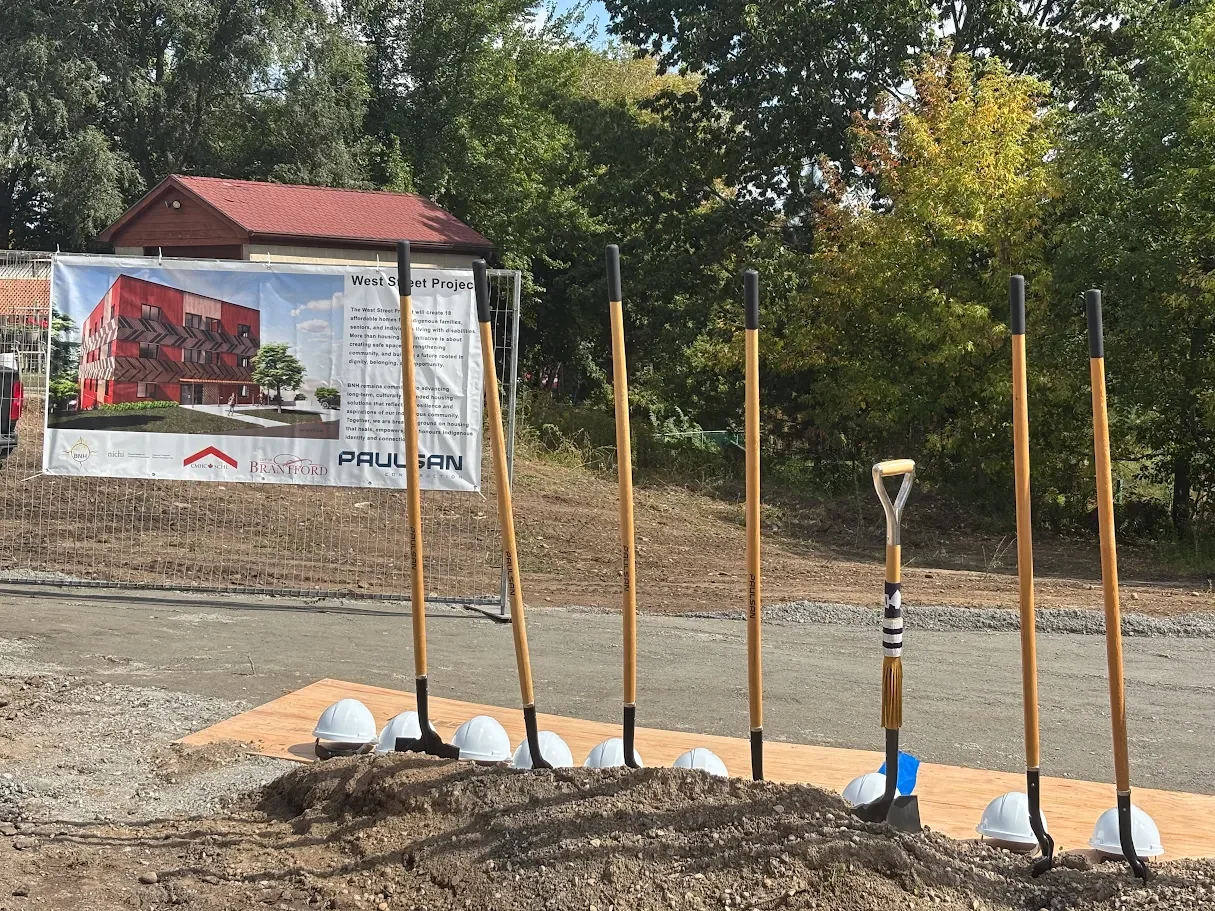
SAI was commissioned to work alongside Brantford Native Housing project leadership and maintenance team to design a multi use residential development that would properly represent the future tenants inhabiting both the residential and communal spaces. As partners in community safety, Brantford Native Housing provides spaces to support their successful mission of offering safe, dignified, and wrap-around housing program options that are holistic and culturally suitable for their clients, tenants, and all Indigenous community members residing in the community. With these mission statements in mind SAI developed a scheme for a new apartment building located on West Street in Brantford, Ontario. The apartment will consist of 3 floors with 18 units, which include four 2-bedrooms and fourteen 1-bedroom, four of which are barrier-free. The apartment complex also includes a large meeting room adjacent to a large outdoor space and medicinal garden for larger community gatherings, ceremonies and community programming, and a communal laundry facility. Natural materials were also prioritized for the exterior facade and interior finishes to create comfortable and welcoming public and residential spaces. These residential units are to fall within the affordable housing sector to provide more housing options for all members of the Brantford community.
Location: Brantford, Ontario
Client: Brantford Native Housing
Status: Tender, 2026
Value: $8 million
Size: 16,790 sq. ft.
Team Members: Eladia Smoke, Esther Link, Kyara Wendling, Sarah Tyler
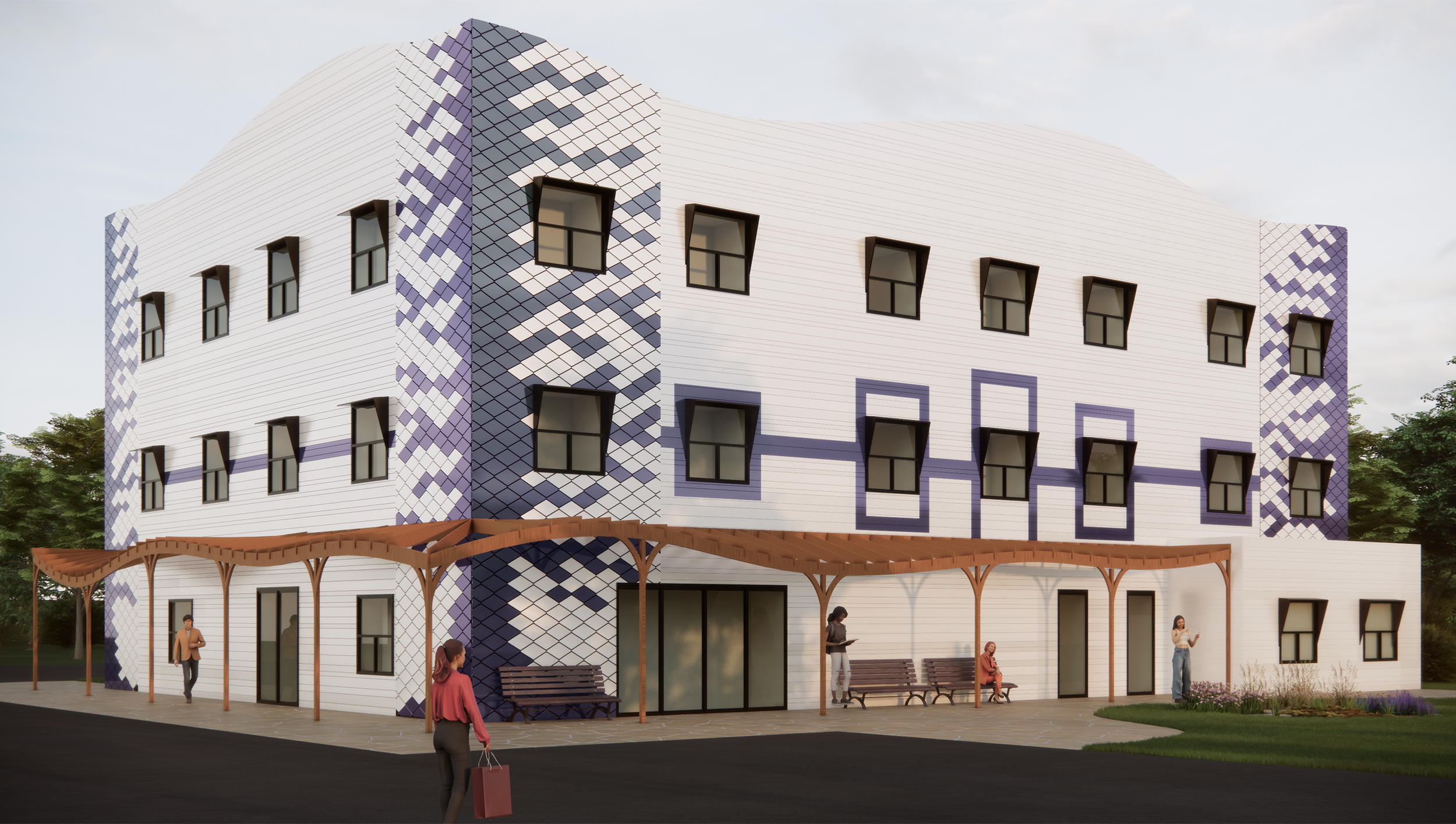
Working closely with Brantford Native Housing leadership, SAI designed a new affordable and accessible housing undertaking. Ojistouh House will offer transitional housing for women, with or without children. The objective of this building was to create a safe and dignified space that provides support and culturally relevant programming for tenants.
Ojistoh House is three stories and contains 12 housing units: 1 five bedroom unit, 4 two bedroom units, 5 one bedroom units, and 2 barrier-free units (1 one bed and 1 two bed). In addition to the housing units, the building has office space for BNH employees who will be able to provide in-house support to tenants including counselling in a dedicated space. There is also an amenity room, which features shared space for tenants including a kitchenette, open space for events, and a sliding door to provide a blended indoor-outdoor flow in warmer months.
The design is inspired by wampum belts, which have long been representative of shared wisdom and agreements between peoples. Some of the most recognized wampum belts, such as the Hiawatha Belt of the Haudenosaunee Confederacy, represent an agreement between nations that involves caretaking for each other and shared land. These teachings are represented in the design of this transitional house. In addition, traditional beadwork that brings women together is an inspiration for the facade design. Throughout the building, natural and bright materials were chosen, such as wood features in shared spaces, to bring a warm and welcoming atmosphere for the people that need a safe space to land.
Location: Tyendinaga, ON
Client: Tyendinaga | Mohawks of the Bay of Quinte
Value: $11,750,000
Size: 22,863 sq. ft.
Status: Contract documents 2025
Team Members: Eladia Smoke, Kyara Wendling
Smoke Architecture is working alongside representatives from the project leadership team at Tyendinaga Mohawk Territory to design an apartment building in the community. Collaboration was undertaken early on to ensure the building would properly represent the future tenants inhabiting both the residential and communal spaces. SAI developed a scheme for a new apartment building located off of North Street, as part of a larger housing initiative in the Tyendinaga Mohawk Territory. The apartment will consist of 3 f loors with 21 units, which include eight 2-bedrooms, two of which are barrier-free and thirteen 1-bedroom, three of which are barrier-free. The apartment complex also includes a large meeting room adjacent to a large outdoor space for larger community gatherings and ceremonies, a fitness room and a smaller meeting room for tenants and community members to enjoy. Natural materials were prioritized for the exterior facade and interior finishes to create comfortable and welcoming public and residential spaces. These units are to fall within the affordable housing sector to provide more housing options for the members of the Tyendinaga community. The design targets a Net Zero Ready approach, which will be mainly achieved with the optimization of wall assemblies and conscious selections of energy efficient mechanical equipment.
New Construction
Location: Pickerel, ON
Client: Henvey Inlet First Nation
Construction Value: $2.1 million
Size: 6,000 sq. ft.
Status: Completed, 2018
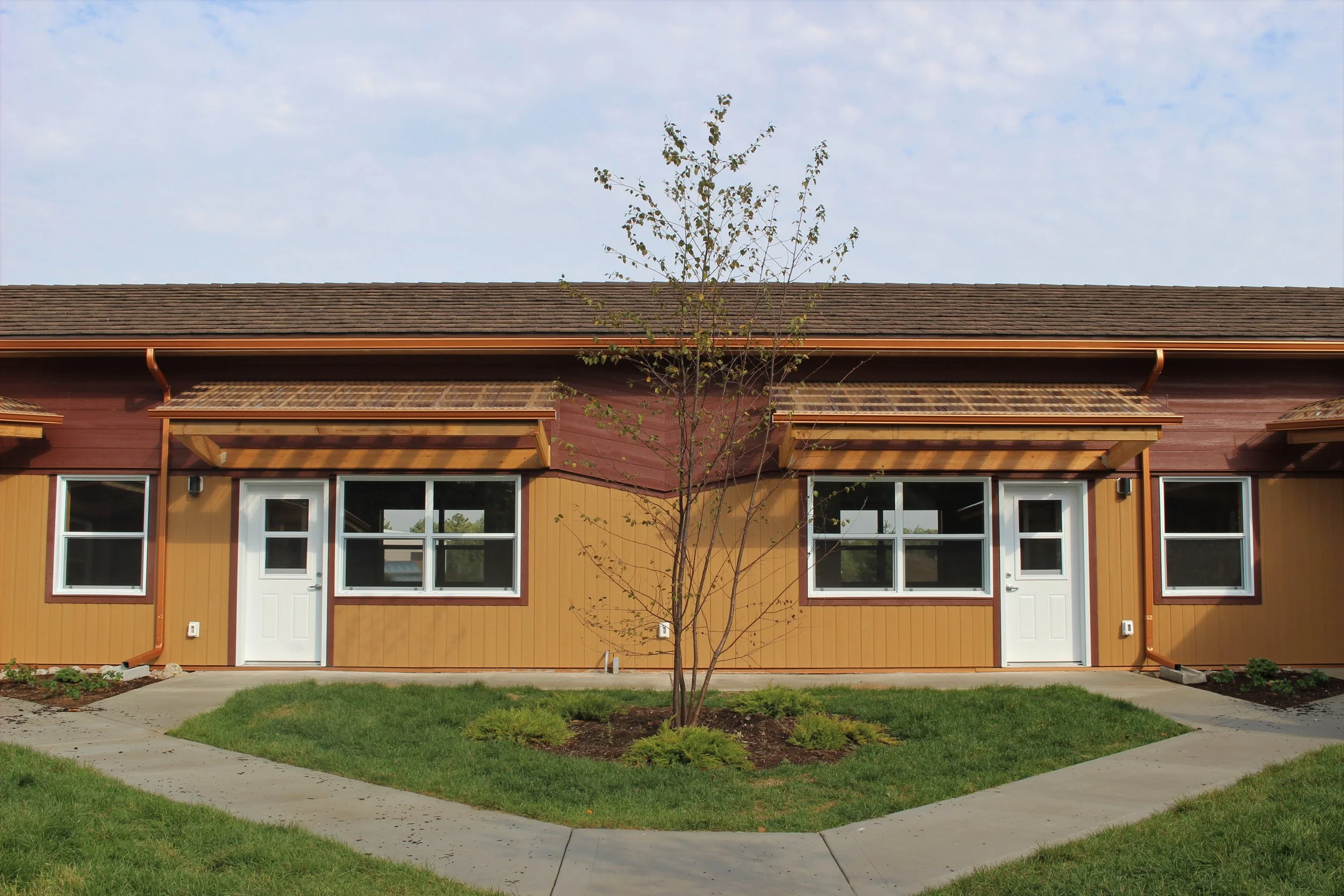
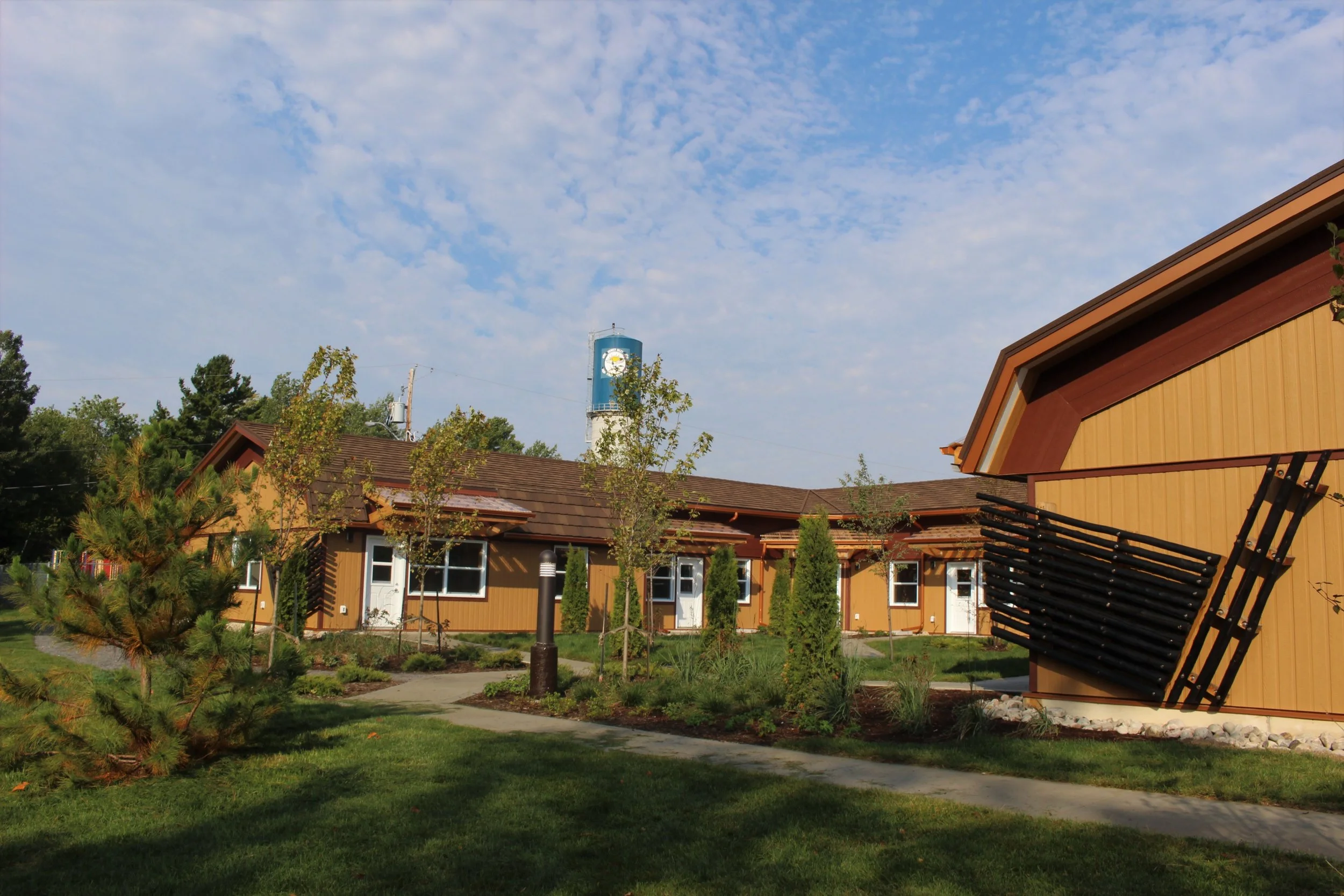
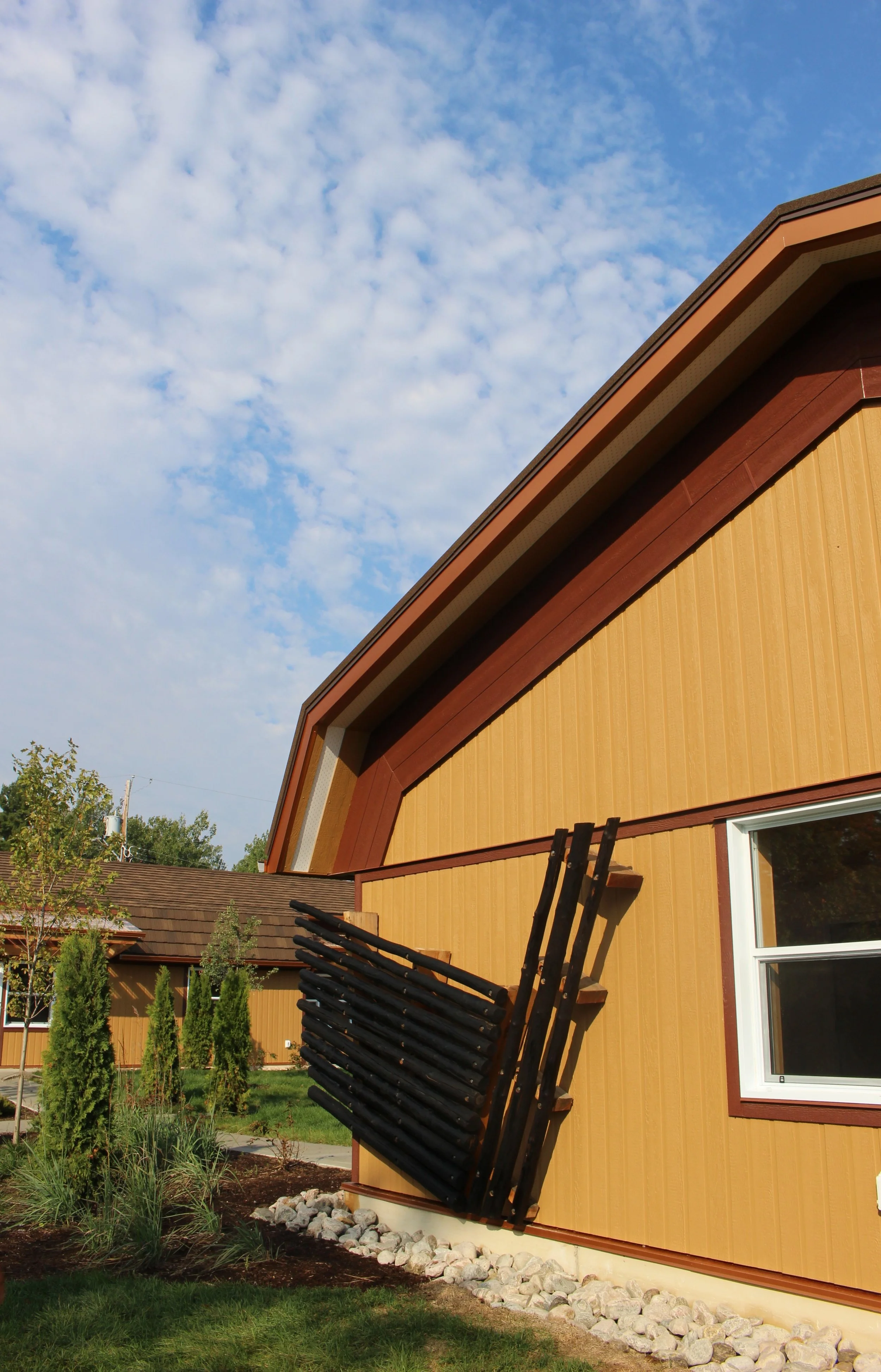
This new 8 unit residence (four each of 2-bedroom and 1-bedroom units) is inspired by the Thunderbird geometrical designs seen in Anishinaabe beadwork. The symbolism is significant to Henvey Inlet First Nation, who wanted this new rental accommodation to be immediately recognizable as Anishinaabe architecture. The courtyard is enclosed by two wings, enclosing a safe and cozy place for children and families. The play yard is just to the west, the ice rink to the north, and the health centre, daycare, and after-school program are just to the east of this site, making it perfect for young families and Elders. All the trees on the site were carefully preserved and more planted in an all-indigenous species landscaping plan.
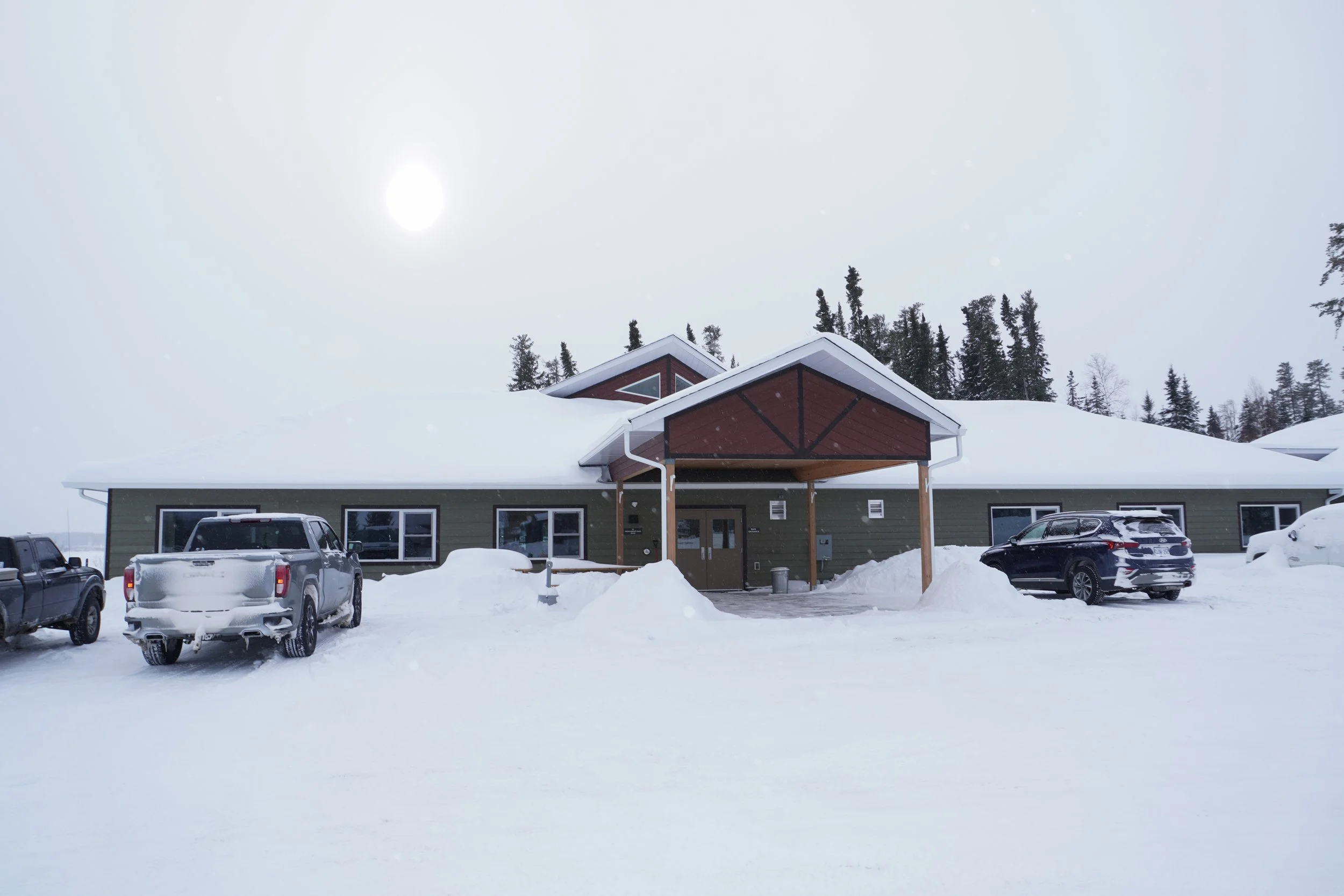
Location: Frenchman’s Head, Lac Seul First Nation
Client: Lac Seul First Nation
Size: 9,200 sf
Status: Completed Summer 2023
Team Members: Eladia Smoke (design), Larissa Roque (design, production), Julie Bedard (construction administration)
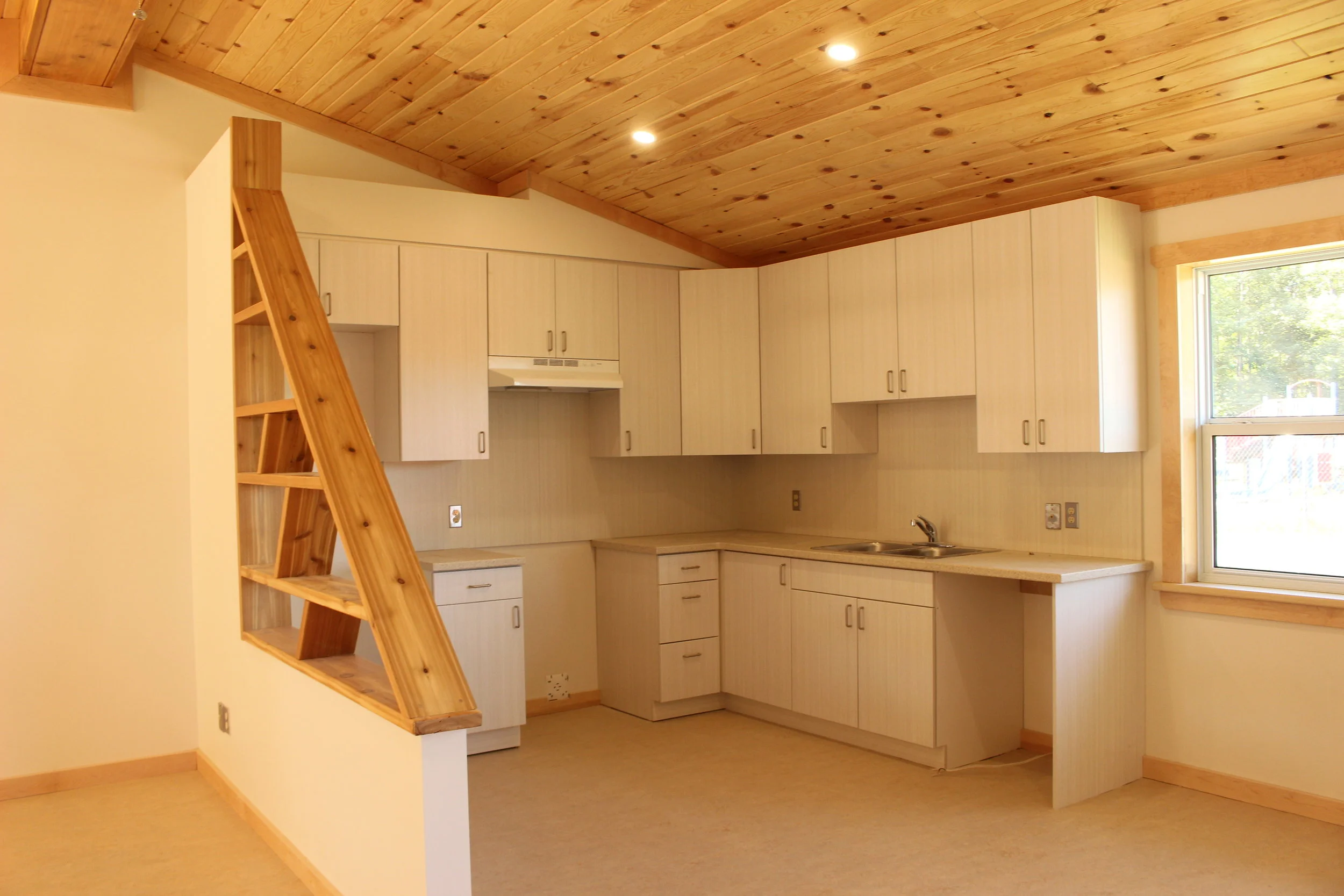
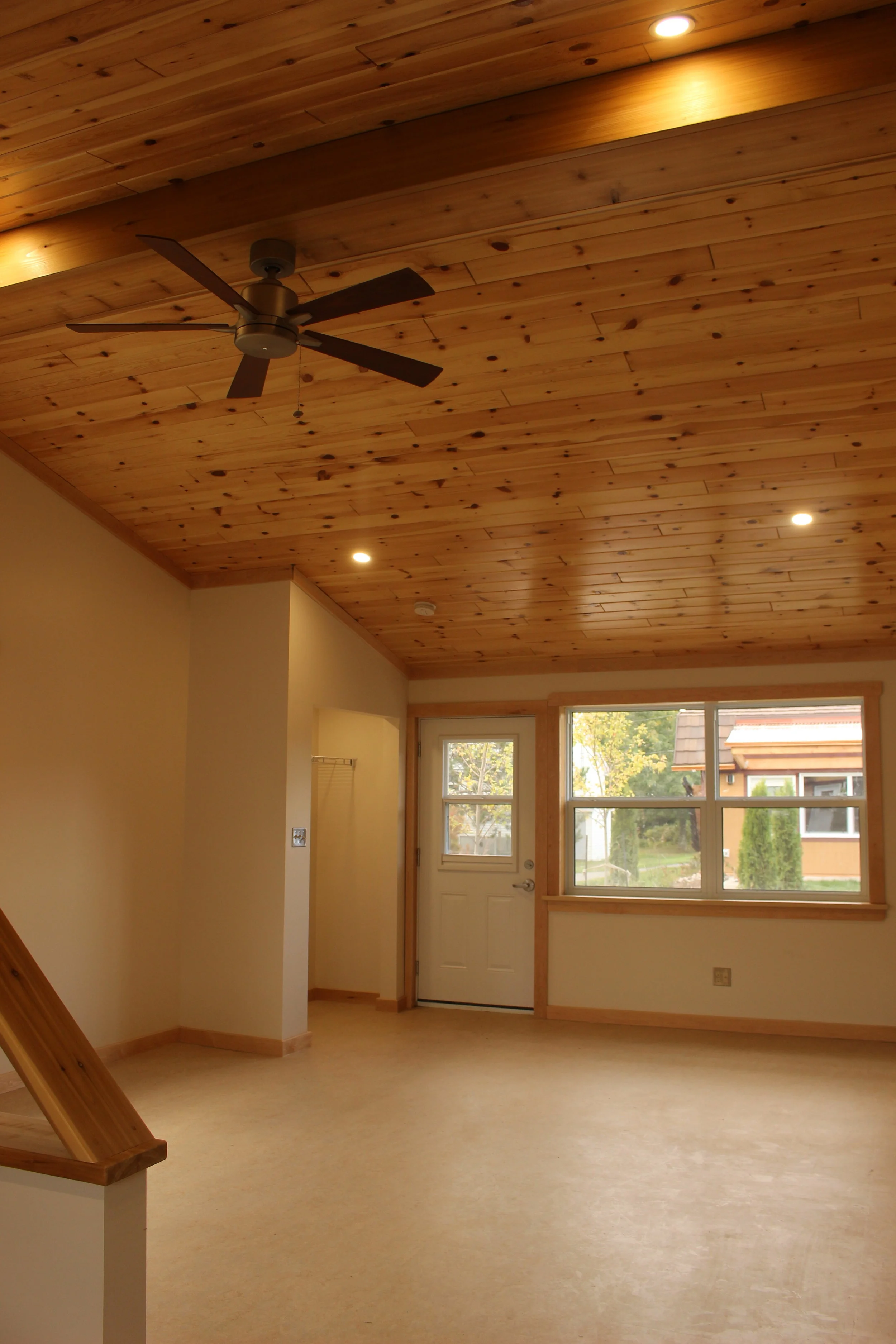
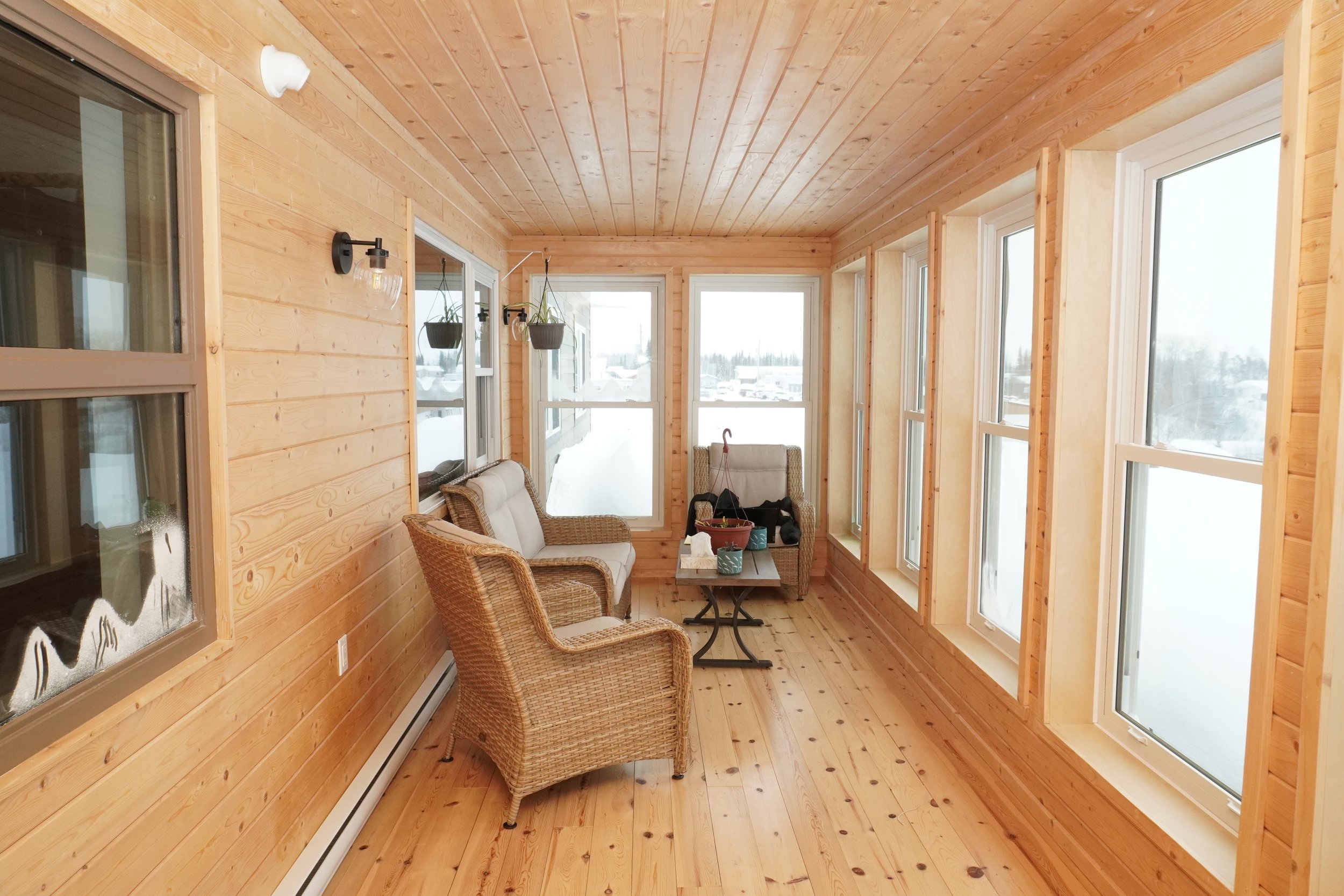
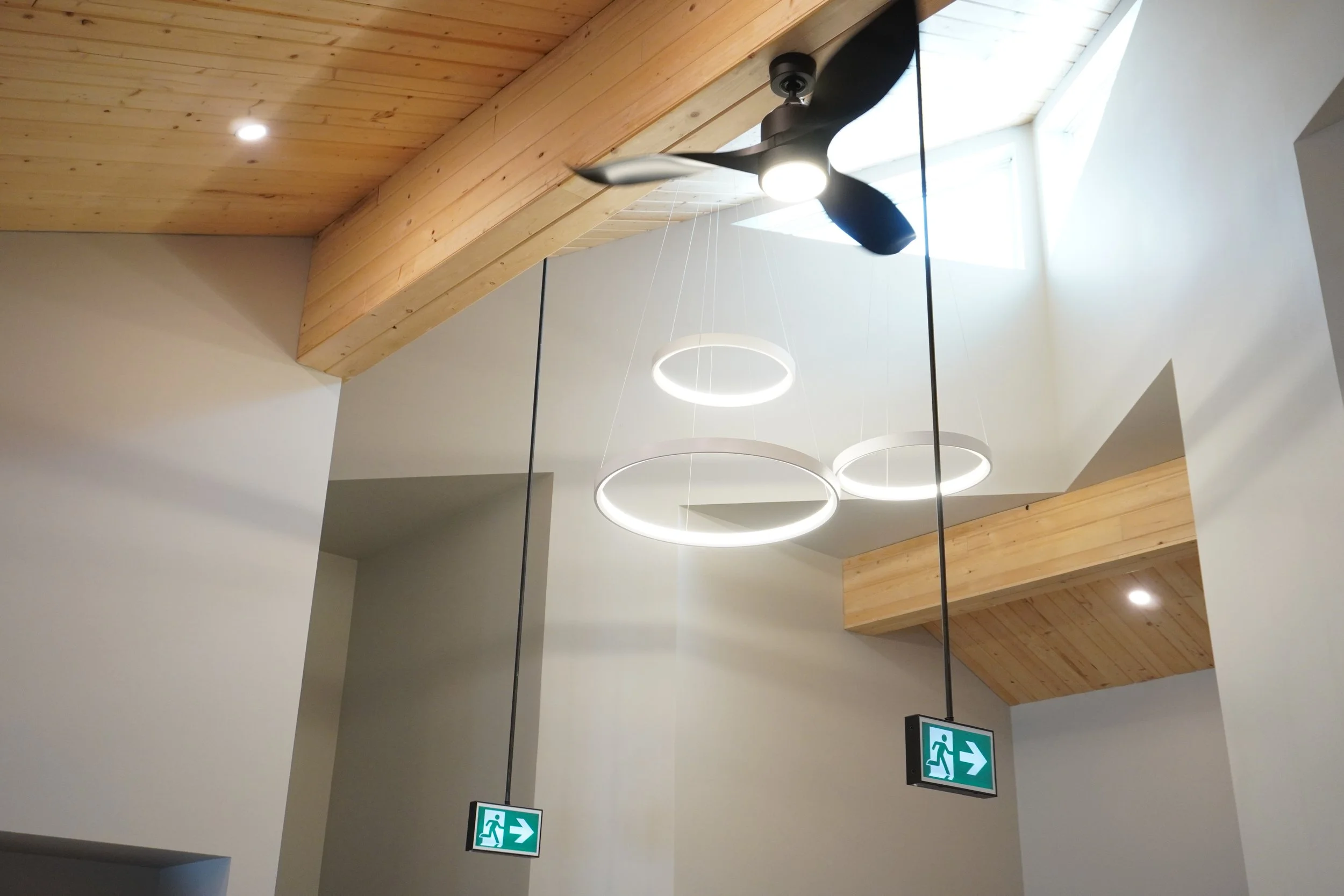
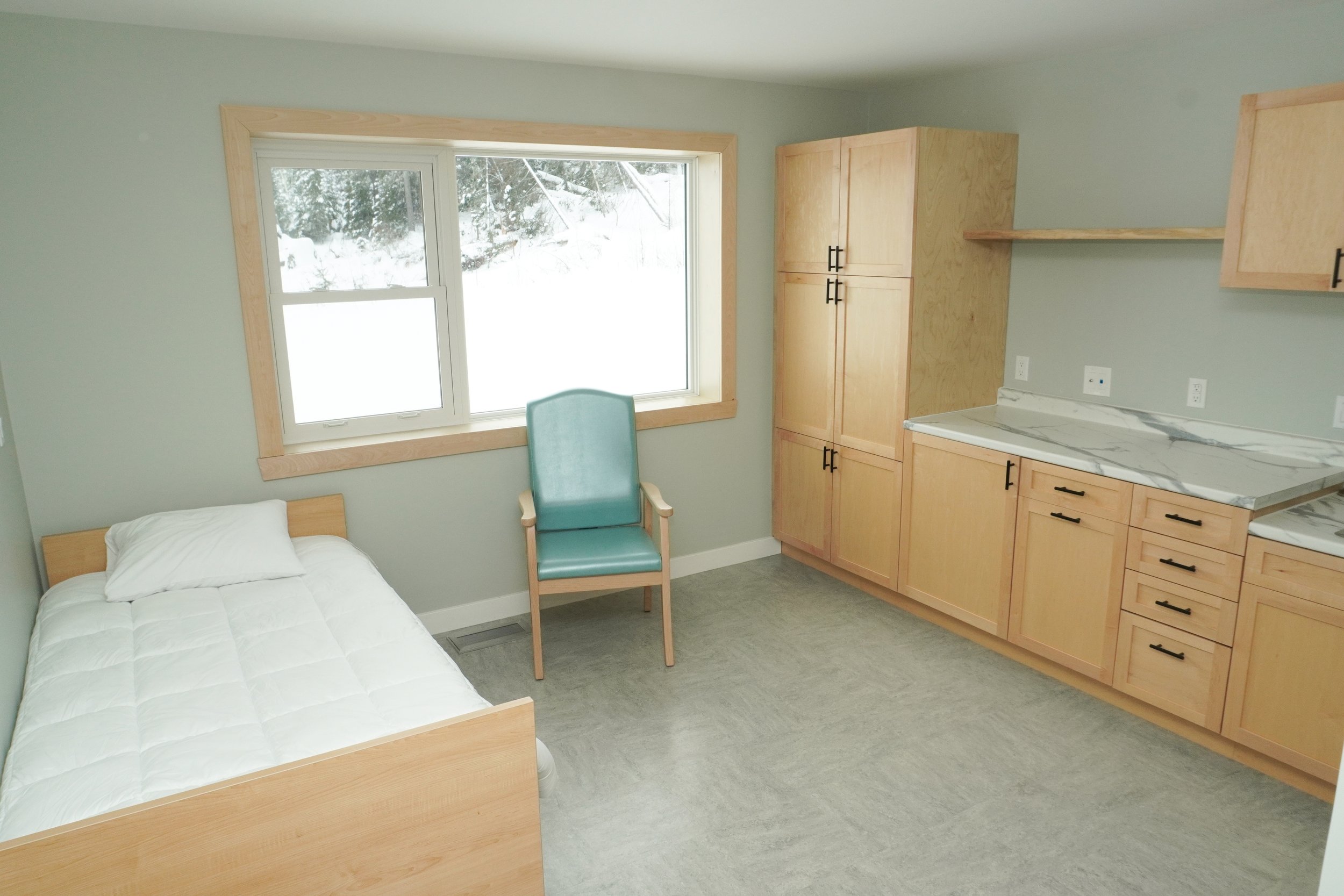
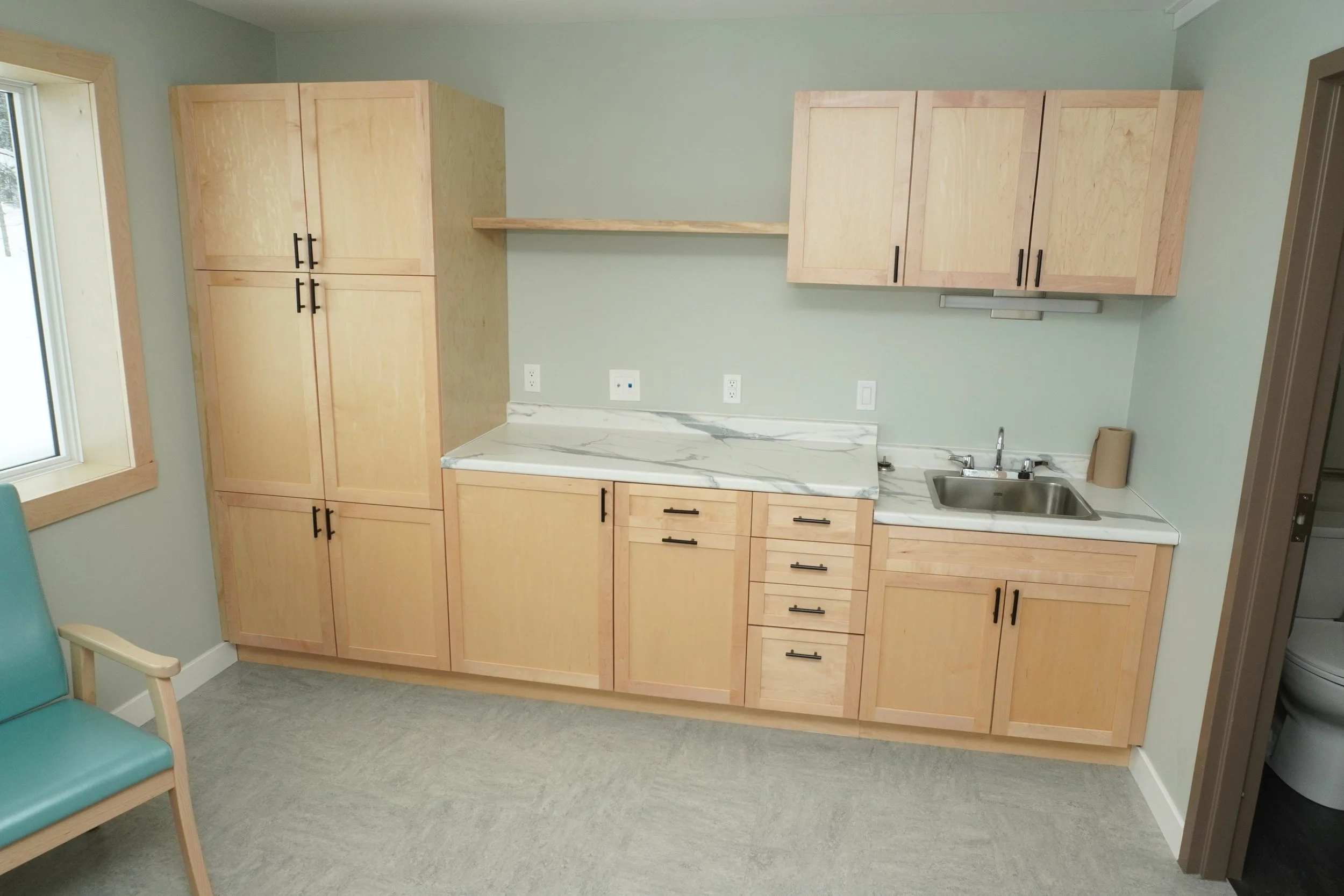
SAI was commissioned in 2017 to complete a 10-bed long term care facility directly beside the existing medical building. Because the construction value and project scheduling were very efficient, LSFN successfully secured additional funding to complete 4 senior’s independent-living 2-bedroom apartments with direct access to amenities in the main building. Features include a generous lake-view sunroom connected to a dining and multi-purpose area daylit from two roof-monitor windows set high in the sloped wood ceiling. Daylight comes in above the main entrance that opens into the shared great room for a continual connection to forest, lake, and sky views. Amenities include onsite staff offices, two connected social spaces with dining & commercial kitchen, bathing / foot care, laundry / janitorial, and large vehicle garage complete with emergency generator.
Location: Brantford, Ontario
Client: Brantford Native Housing
Status: Study completed, 2024
Value: $13.5 million
Size: 22,500 sq. ft.
Team Members: Eladia Smoke, Kyara Wendling, Lily Desmoulins
Brantford Native Housing has outgrown their existing administrative and operational spaces and hope that a new facility will aid in their continuous dedication to provide effective, efficient and culturally appropriate services.The development of a new facility and related programs promotes the important work the BNH accomplishes within the urban and rural areas of Brantford and Brant-County communities that they serve. The new facility consolidates two existing buildings into one new larger structure, facilitating the integration of staff, clients, and tenants, and fostering a cohesive narrative of inclusivity and collaboration to strengthen community bonds and shared purpose. Moreover, this consolidation promotes continuity in operations, improves access to support services, and strengthens the cultural identity of the Brantford Native Housing community, ensuring a more cohesive and nurturing environment for all clients. The new development will bring generations together into a shared community space of discovery.
The facility is classified as a mixed-use residential building, with commercial and public assembly spaces.The basement level accommodates a leasable multipurpose space complete with washrooms, a kitchen and an office; storage space; public outreach programming space complete with a reception, washrooms, and private counseling space; and a staff area with private offices and an open office space. The ground level accommodates a large public programming space with a kitchen; a laundry facility; a reception area; private meeting rooms; and staff space complete with private offices, an open office space, and a staff room and kitchen. The second and third level accommodate 6 1-bedroom units respectively, for a total of 12 1-bedroom units. The civil and landscaping scope includes parking, lot grading, green space, site services, etc. The study completed 2024 includes an assessment of the current facility and Class C construction estimate.
Feasibility Study
Location: Bunibonibee Cree Nation, Manitoba
Client: National Research Council of Canada / Bunibonibee Cree
First Nation
Status: Study completed, 2020
Team Members: Eladia Smoke, Larissa Roque
A prototypical design for a 9-bedroom multi-family home in Bunibonibee Cree Nation responds to the nature of families and the ever-growing need for housing specific to the community. Form, size and materials where determined with local labour and shipping limitations in mind.
The design of a housing system for a remote First Nation or Métis community in Canada that is inspired by cultural tectonics, history, materiality, takes into consideration how the community will benefit in a multitude of ways, and that directly responds to a series of community engagement visits.